Clear Answers and Precise Care for Thyroid and Parathyroid Conditions
A lump in your neck or an unexpectedly high calcium level on a routine blood test can be unsettling. At Surgical Associates of La Jolla in La Jolla, CA , our experienced surgeons work with a trusted network of endocrinologists to evaluate thyroid nodules, treat thyroid cancer and correct parathyroid disease. Patients from La Jolla, North San Diego County and throughout Southern California get a coordinated plan built around a fast, accurate diagnosis and careful surgical technique.
Request an AppointmentUnderstanding the Thyroid and Parathyroid Glands
The thyroid is the largest gland in the neck. It produces hormones that regulate your metabolism, energy level, heart rate and body temperature. Just behind it sit four small parathyroid glands, each about the size of a grain of rice. These glands produce parathyroid hormone (PTH), which controls how much calcium is in your blood and bones.
Because the glands sit so close together and near the nerves that control your voice, surgery in this area calls for precision and experience. Our team performs thyroid and parathyroid procedures as part of our broader surgical oncology and general surgery practice. You can review all of our surgical services or browse the conditions we treat.
Thyroid Nodules and Thyroid Cancer
Thyroid nodules are common, and most are benign. Any new nodule should still be evaluated, because cancerous nodules found early have a very high cure rate when properly treated. Learn more on our thyroid nodules page.
Symptoms
Many nodules cause no symptoms and are found during a routine exam or imaging test. When symptoms appear, they may include:
- A lump or swelling at the front of the neck
- An enlarged thyroid gland (goiter)
- Neck pain or a feeling of pressure
- Hoarseness or other changes in the voice
- Difficulty swallowing or breathing in larger nodules
Risk Factors
Anyone can develop thyroid nodules, but they are more common in women and in people who received radiation to the head or neck during childhood. A family history of thyroid disease or thyroid cancer also raises the risk.
Diagnosis
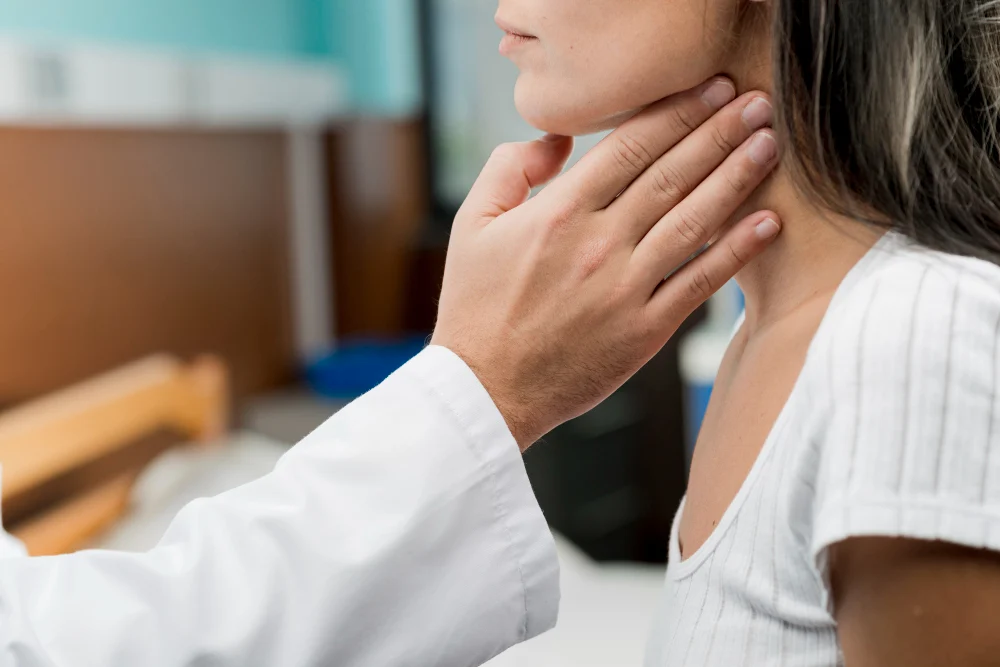
An ultrasound shows the size of a nodule and whether it is solid or filled with fluid. If a nodule looks suspicious, a fine-needle aspiration biopsy collects a small sample of cells to determine whether it is cancerous. These tests are quick and cause minimal discomfort.
Thyroidectomy
When cancer is confirmed, or when a nodule is large or causing symptoms, part or all of the thyroid may need to be removed. The procedure is performed under general anesthesia. Your surgeon makes a small incision along a natural crease in the neck so the scar is less noticeable, removes the affected portion of the gland or the entire thyroid, and closes the incision with care. Throughout the operation, the surgeon works to protect the vocal cord nerves and the parathyroid glands.
Recovery After Thyroid Surgery
The incision usually heals in about a week, and most patients return to normal activities within a few weeks. Patients who have the entire thyroid removed take a daily thyroid hormone pill to maintain normal function. Some thyroid cancer patients also need additional treatment, such as radioactive iodine therapy, coordinated with their endocrinologist. Our team follows you closely in the days, weeks and months after surgery.
Parathyroid Disease and Hyperparathyroidism
The most common parathyroid problem is hyperparathyroidism, which occurs when one or more glands produce too much PTH. In most cases, the cause is a parathyroid adenoma, a benign growth on a single gland. Parathyroid cancer is extremely rare. Visit our hyperparathyroidism page for more detail.
Symptoms
Excess PTH raises calcium levels in the blood and pulls calcium from the bones. Over time, this can lead to:
- Kidney stones
- Bone thinning and osteoporosis
- Fatigue and muscle weakness
- Depression, irritability or trouble concentrating
- Constipation and abdominal discomfort
- Increased thirst and frequent urination
Risk Factors
Most cases are random and are discovered through a routine blood test showing higher than normal calcium. Some forms are linked to an inherited condition, so people with a family history of parathyroid disease face a higher risk. Contact our La Jolla office if you think you may be at risk, and we can arrange an evaluation.
Parathyroid Surgery
Parathyroid adenoma develops slowly and responds very well to treatment, especially when it is caught early. Surgery is the most common and effective option. In most cases, the surgeon removes only the gland containing the adenoma through a small incision in the neck and leaves the healthy glands in place. Calcium levels often begin returning to normal shortly after surgery.
Related Endocrine Surgery
Our surgeons also treat other endocrine conditions, including adrenal tumors, which may be removed using advanced laparoscopic surgery.
Preparing for Your Visit
If you are scheduling your first appointment, our new patient information walks you through the process. You can also learn how to prepare for your surgery, review billing and insurance details, or meet our providers before your consultation.
Thyroid and Parathyroid Surgery FAQs
Are most thyroid nodules cancerous?
No. Most thyroid nodules are benign. Because a small percentage can be cancerous, every new nodule should be evaluated with an ultrasound and, when needed, a fine-needle biopsy.
How is thyroid cancer diagnosed?
Diagnosis usually begins with a neck ultrasound to measure the nodule and assess its features. If it looks suspicious, a fine-needle aspiration biopsy collects cells to check for cancer. These tests are quick and cause minimal discomfort.
Will I need to take medication after thyroid surgery?
If your entire thyroid is removed, you will take a daily thyroid hormone pill to keep your metabolism working normally. Patients who have only part of the gland removed often do not need medication, though levels are checked after surgery.
Will thyroid surgery affect my voice?
The nerves that control the vocal cords run close to the thyroid. Our surgeons take great care to protect them. Mild, temporary hoarseness can occur after surgery, while permanent voice changes are uncommon.
What causes hyperparathyroidism?
Most cases are caused by a parathyroid adenoma, a benign growth on one gland that makes too much parathyroid hormone. Less often, more than one gland is enlarged or the condition is linked to an inherited disorder.
How long is recovery after parathyroid surgery?
Most patients go home the same day or the next day and return to light activities within a few days. Many notice improvements in energy and mood as calcium levels return to normal.
How long will my neck scar be?
The incision is small and placed along a natural skin crease in the neck. Once healed, the scar usually blends in well and becomes less noticeable over time.
Get a Thorough Evaluation of Your Thyroid or Parathyroid Concern
Whether you have a new nodule, a confirmed thyroid cancer diagnosis or elevated calcium levels, Surgical Associates of La Jolla is here to guide you through every step. Call (858) 452-5054 or request an appointment online to meet with one of our surgeons in La Jolla, CA .