Clear Answers About a Lump in Your Neck
Being told you have a thyroid nodule can be unsettling, but most nodules are harmless. The surgeons at Surgical Associates of La Jolla in La Jolla, CA review your ultrasound, biopsy results and symptoms with you. Then they recommend the right next step, whether that’s monitoring the nodule or removing it with precise thyroid surgery.
Request an AppointmentWhat Is a Thyroid Nodule?
A thyroid nodule is a solid or fluid-filled lump that forms inside the thyroid, the butterfly-shaped gland at the front of your neck. The thyroid makes hormones that control your metabolism, heart rate and energy level. Nodules are very common, especially in women and older adults. Many are found by accident on an imaging scan done for another reason.
The great majority of thyroid nodules are benign. A small percentage are cancerous, and some benign nodules grow large enough to press on the windpipe or esophagus, or produce too much thyroid hormone. A careful evaluation tells you which group your nodule falls into. Our team treats nodules alongside other endocrine conditions such as hyperparathyroidism and adrenal tumors.
Signs and Symptoms
Most thyroid nodules cause no symptoms at all. When they do, you might notice:
- A visible lump or swelling at the base of the neck
- A feeling of pressure or fullness in the throat
- Trouble swallowing or the sense that food is sticking
- Hoarseness or a change in your voice
- Shortness of breath when lying flat, if the nodule is large
- Weight loss, rapid heartbeat, tremor or heat intolerance from an overactive “hot” nodule
What Causes Thyroid Nodules?
The exact cause isn’t always known. Contributing factors include iodine deficiency, overgrowth of normal thyroid tissue, fluid-filled cysts, chronic inflammation such as Hashimoto’s thyroiditis, and a multinodular goiter. Prior radiation exposure to the head or neck and a family history of thyroid cancer raise the chance that a nodule needs closer attention.
How Thyroid Nodules Are Evaluated
A thorough workup helps avoid both missed cancers and unnecessary operations. Your evaluation may include:
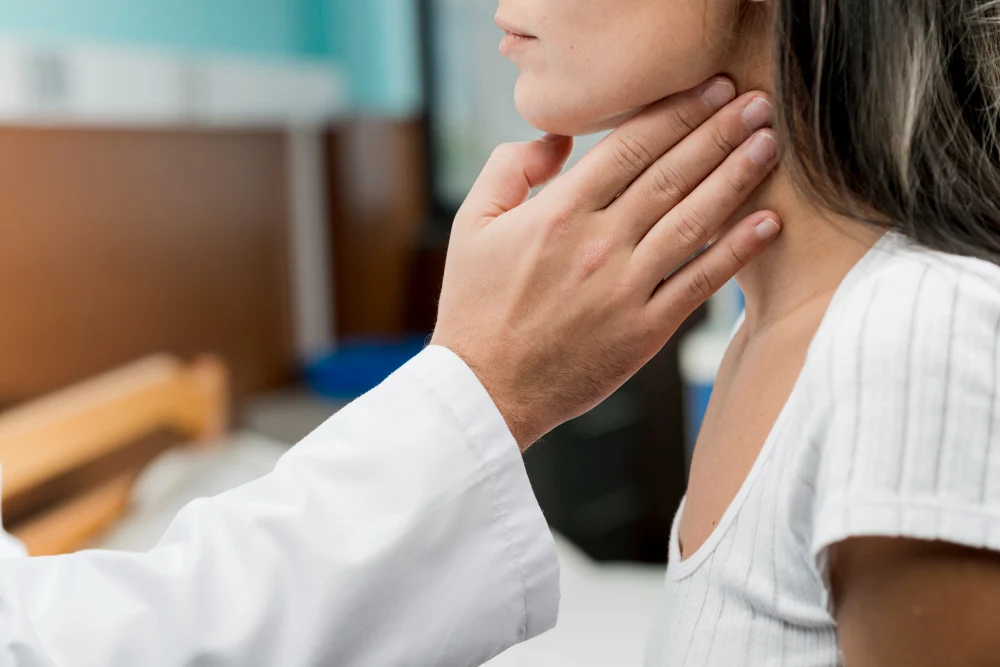
- Physical exam and history: Your surgeon checks the size and feel of the nodule and asks about symptoms, radiation exposure and family history.
- Blood tests: A TSH level shows whether the thyroid is making too much or too little hormone.
- Thyroid ultrasound: Ultrasound measures the nodule and looks for features such as irregular borders, microcalcifications or increased blood flow.
- Fine-needle aspiration biopsy: A thin needle collects cells from the nodule. Results are reported as benign, indeterminate, suspicious or malignant.
- Molecular testing: For indeterminate biopsies, genetic testing of the sample can help clarify the risk of cancer.
To make the most of your first appointment, bring prior imaging and lab work. Our Your Visit page explains what to expect, and new patients can find forms and details on our New Patients page.
Treatment Options for Thyroid Nodules
Watchful Monitoring
Small benign nodules that aren’t causing problems usually just need follow-up ultrasounds to confirm they stay stable. Many patients never need any other treatment.
Thyroid Surgery
Surgery is recommended when a nodule is cancerous or suspicious, when biopsy results stay uncertain, or when a nodule is large, growing or causing symptoms. Depending on your situation, your surgeon may recommend:
- Thyroid lobectomy (hemithyroidectomy): removal of the half of the gland that holds the nodule. Many patients keep enough thyroid function that they don’t need hormone replacement.
- Total thyroidectomy: removal of the entire gland. This is often used for confirmed cancer, nodules on both sides or a large goiter. It requires daily thyroid hormone afterward.
Our surgeons take great care to protect the nerves that control your voice and the parathyroid glands that regulate calcium. Learn more about these procedures on our Thyroid & Parathyroid Surgery page. If a nodule proves to be cancer, our surgical oncology experience lets us coordinate the next steps of your care.
Why Patients Choose Our Surgeons
Our board-certified surgeons bring years of focused experience in endocrine and oncologic surgery. Meet them on our Our Providers page, or read about their areas of expertise. Patients travel to our La Jolla office from across San Diego County, including Del Mar and Carlsbad. See what they say in our patient testimonials, and see the full range of conditions we treat on our Conditions We Treat page.
If surgery is planned, our guide on how to prepare for your surgery walks you through each step. Our billing and insurance team can answer coverage questions before your procedure.
Thyroid Nodule FAQs
Are most thyroid nodules cancerous?
No. The large majority of thyroid nodules are benign. An ultrasound and, when needed, a fine-needle aspiration biopsy help determine whether a nodule needs treatment or simply monitoring.
Do all thyroid nodules need a biopsy?
Not always. Your doctor uses the nodule’s size and ultrasound features to decide. Very small nodules with low-risk features are often watched with repeat ultrasounds instead of being biopsied.
When should a thyroid nodule be removed?
Surgery is usually recommended for nodules that are cancerous or suspicious, nodules with repeatedly indeterminate biopsies, and nodules that are large, growing or causing trouble swallowing, breathing or voice changes.
Will I need thyroid hormone medication after surgery?
After a total thyroidectomy, you will need daily thyroid hormone replacement. After a lobectomy, many patients make enough hormone on their own, though some need a small dose. Your surgeon will check your levels after surgery.
What is recovery like after thyroid surgery?
Many patients go home the same day or the next morning. Mild throat soreness and neck stiffness are common for a few days, and most people return to light activities within about one to two weeks.
Can thyroid surgery affect my voice?
Temporary hoarseness can happen after thyroid surgery. Permanent voice changes are uncommon. Our surgeons carefully identify and protect the nerves that control the vocal cords during every operation.
Do I need a referral to see a surgeon about a thyroid nodule?
Requirements depend on your insurance plan. Call Surgical Associates of La Jolla at (858) 452-5054 and our staff can help you check what your plan requires and get your records ready for your visit.
Get a Clear Plan for Your Thyroid Nodule
You don’t have to wait and wonder about a nodule. Our surgeons will review your results, explain your options in plain language and help you decide on the next step. Call (858) 452-5054 or request an appointment online today.